Railway Modeling: Engineering in Miniature
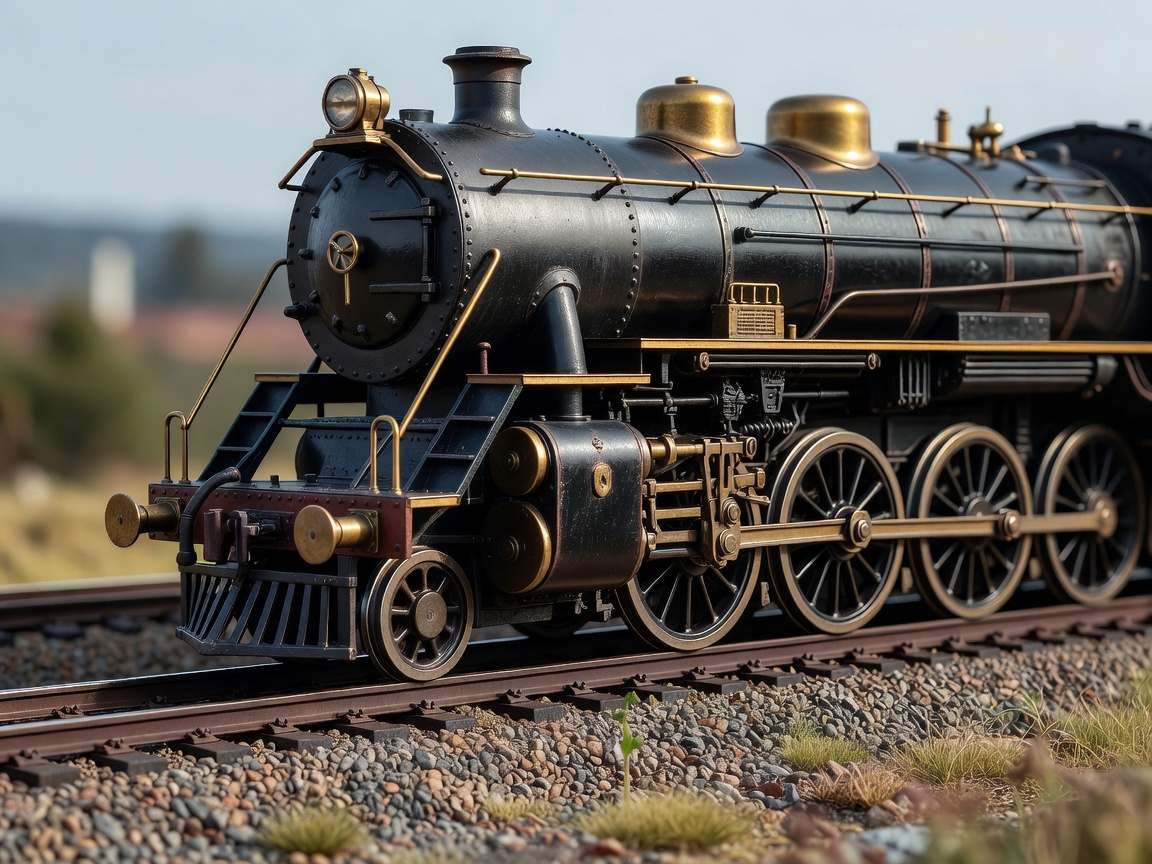
Railway modeling—often referred to as model railroading in North America—is a multifaceted hobby that combines carpentry, electrical engineering, historical research, and fine art. The goal is to create an operational, scaled-down railway network, complete with rolling stock, realistic landscapes, and functioning industries.
Navigating Gauges and Scales
The first and most consequential decision a modeler makes is selecting a scale (the proportion of the model to the real thing) and a gauge (the distance between the rails). The most common standards are:
- HO Scale (1:87): The undisputed king of the hobby globally. It offers the widest variety of available models, track, and scenery. It is large enough for fine detailing but small enough to build a complex layout in a spare bedroom. In the UK, the slightly larger OO scale (1:76) runs on HO gauge track and holds equivalent dominance.
- N Scale (1:160): Roughly half the size of HO. N scale is perfect for hobbyists who want to model long, sweeping mainline trains moving through expansive landscapes, or for those with very limited physical space.
- O Scale (1:48): Significantly larger, heavy, and robust. It allows for spectacular detail but requires vast amounts of space for realistic curves and consists.
Baseboards and Layout Design
A layout is only as good as the structure supporting it. Modeler typically build robust baseboards using plywood and dimensional lumber, employing techniques like L-girder construction to create a sturdy, warp-free platform. The layout design itself is usually mapped out extensively beforehand using CAD software to ensure curves are not too tight (which derails trains) and inclines are not too steep (which stalls them).
Powering the Rails: Analog DC vs. DCC
Historically, model trains were controlled via analog Direct Current (DC). Turning a dial increased the voltage to the entire track, making every locomotive on that track move simultaneously. This made running multiple trains independently quite difficult, requiring the track to be broken into dozens of electrically isolated "blocks."
Today, the standard is Digital Command Control (DCC). In a DCC system, a constant voltage is applied to the rails along with a digital signal. Every locomotive contains a microchip (a decoder). The controller sends a packet of data addressed specifically to locomotive #4014, telling it to blow its horn and accelerate to 30 scale miles per hour. All other locomotives on the same track ignore the signal and remain stationary. This revolution has made operations incredibly realistic, allowing for sound effects, synchronized smoke, and independent lighting.
Scenery and Ballasting
Creating the landscape surrounding the tracks is where the artistic aspect of the hobby shines. Real railways are embedded in a bed of crushed stone called ballast, which provides drainage and stability. Modelers replicate this by carefully spreading finely ground real rock over the plastic track ties, then bonding it in place using a diluted mixture of PVA glue, water, and a drop of dish soap (to break surface tension).
Mountains and valleys are formed using XPS foam or plaster cloth over cardboard webbing. The final layer involves "flocking"—using ground foam and static grass to mimic vegetation, and real dirt or sanded grout to simulate earth. A well-sceniced layout transports the viewer out of the spare room and directly into the miniaturized world.